
In-office or at-home teeth whitening: differences and prices
In-office whitening is done by a dentist with a stronger whitening gel and gives a visible result straight after the procedure, while at-home whitening uses custom trays and a milder gel that you wear at home over several weeks. On SF Dent's price list, in-office whitening is €230.00 and home whitening €128.00. Which one suits you is decided after an examination.
In short:
- Both methods use peroxide gels and whiten only natural teeth, not fillings or crowns.
- In-office whitening is faster; at-home whitening is more gradual and cheaper.
- Temporary sensitivity is the most common side effect of both.
Below we compare the two methods: how they work, how fast you see a result, who should not whiten and what each option costs. The procedure at the clinic is described on our teeth whitening page.
How does teeth whitening work?
Whitening gels contain hydrogen peroxide or carbamide peroxide. The peroxide penetrates the enamel and dentine and breaks down the staining molecules that build up over the years from coffee, tea, red wine, tobacco or simply with age. This changes the colour of the tooth itself, not just its surface.
Whitening does not work on fillings, crowns, veneers or bonding; they keep their colour. Nor does it change staining caused by some medicines or by a dead nerve as well as ordinary staining. That is why, before whitening, the dentist checks which teeth are natural and where the colour comes from.
What is the difference between in-office and at-home whitening?
| In-office whitening | At-home whitening | |
|---|---|---|
| Who does it | The dentist, in the surgery | You, at home, following the dentist's instructions |
| Gel | Higher concentration | Lower concentration |
| Gum protection | The dentist isolates the gums before applying it | Custom trays made from an impression |
| When you see a result | After the procedure | Gradually, over days and weeks |
| Control over the shade | In one visit | You can stop when you like the colour |
| Price at SF Dent | €230.00 | €128.00 |
How does in-office whitening work?
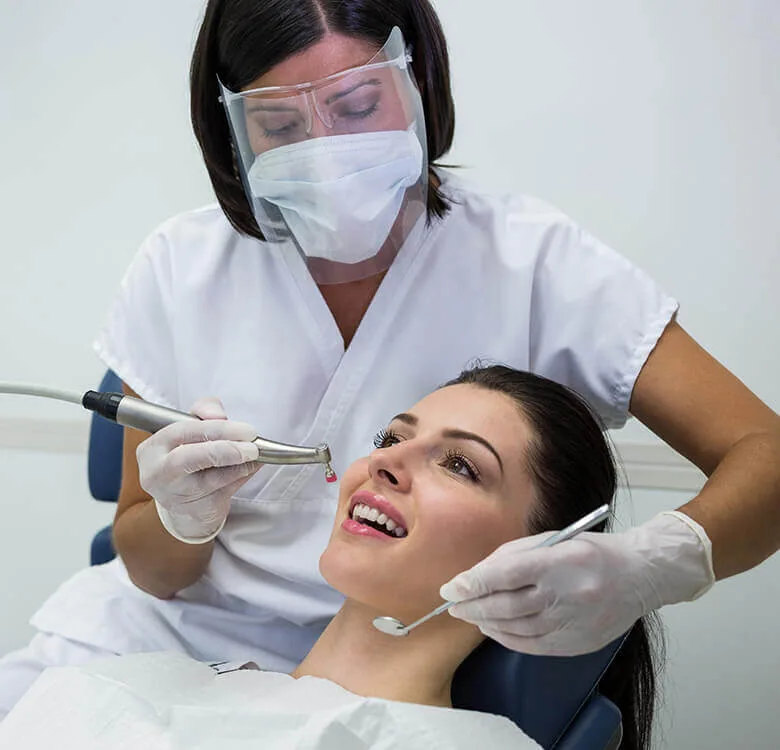
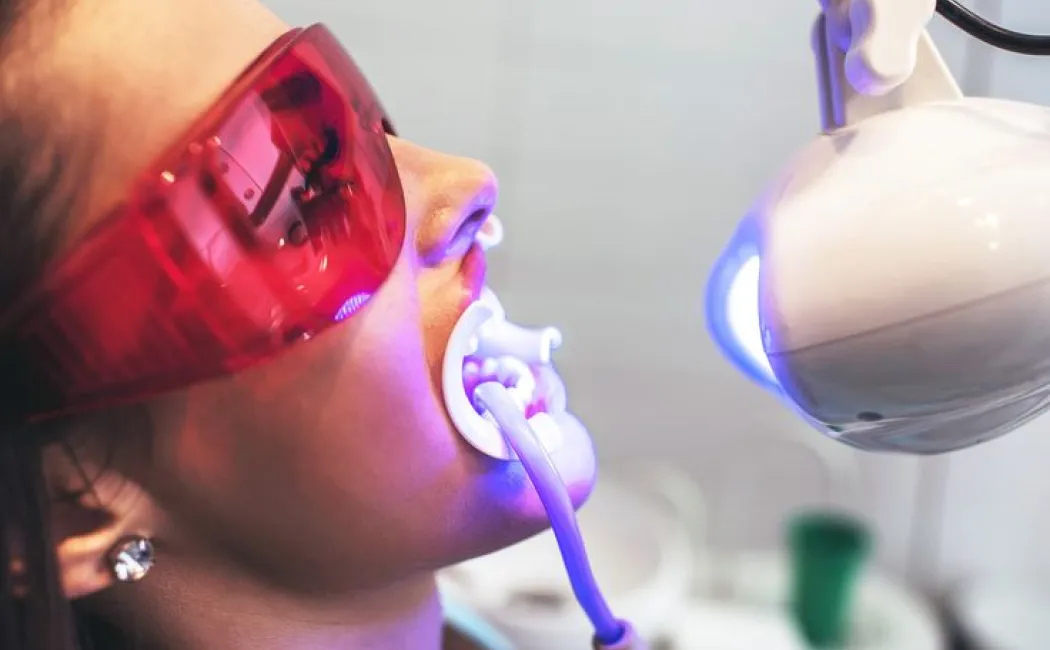
First the dentist examines the teeth and gums and records the starting shade. Before whitening it is best to have the teeth cleaned of tartar and stains, because the gel then works evenly. During whitening the gums are covered with a protective material and the gel is applied to the teeth. It stays on for a set time and is replaced if needed. The whole procedure takes a few hours or less, depending on the method. The UK's NHS gives about 1 to 2 hours for whitening at a dental surgery (NHS: Teeth whitening).
The advantage is speed: it suits you if you want lighter teeth for a particular occasion. The drawback is that the stronger gel causes temporary sensitivity more often.
How does at-home whitening work?
For home whitening, impressions are taken and custom trays are made that fit your teeth exactly. You get a lower-concentration gel and instructions on how long to wear the trays each day. The effect builds up gradually. The NHS gives 2 to 6 weeks for whitening at home with a dentist's kit (NHS).
You keep the trays, so you can top up the colour later with new gel, if your dentist agrees. Home whitening takes discipline: the result depends on wearing the trays regularly.
Which whitening is more effective?
Both methods can give a similar end result; the difference is mainly speed. How light the teeth become depends more on the starting shade and the type of staining than on the method. Yellowish staining usually whitens more easily than greyish. No method can promise an exact shade in advance.
Does whitening hurt, and is it bad for enamel?
Whitening usually does not hurt. The most common side effect is temporary sensitivity to cold and heat, and sometimes gum irritation. The NHS lists sensitivity, sore gums and white patches on the gums as temporary effects (NHS). They usually go within a few days of finishing.
Professional whitening done according to a dentist's instructions is considered safe for enamel for most people. The risks rise with products of unclear composition, with overuse and when whitening teeth with decay or exposed roots.
Who should not whiten their teeth?
- pregnant and breastfeeding women;
- children and teenagers: the NHS does not recommend whitening under 18;
- people with untreated decay, inflamed gums or severe sensitivity;
- people allergic to peroxide.
If you have visible fillings or crowns on your front teeth, discuss with the dentist whether they will need replacing after whitening to match the new colour.
How long does whitening last?
The effect is not permanent. How long it lasts depends on your habits. Coffee, tea, red wine and tobacco stain the teeth again. The NHS says that if you follow your dentist's advice, the effect may last around 3 years. Regular tartar removal and Airflow help the colour last longer; see our article "Tartar: why does it form and how often should it be removed?". If you want to change the shape or colour of a single tooth rather than the whole smile, read "How long does bonding last and how do you look after it?".
How much does teeth whitening cost?
On SF Dent's price list, in-office whitening is €230.00, home whitening is €128.00 and an examination is €30.00. Whitening is a cosmetic procedure and is not covered by the НЗОК (NHIF).
| Service | Price |
|---|---|
| Examination | 30.00€ |
| In-office (clinical) whitening | 230.00€ |
| Home whitening | 128.00€ |
Prices are from the clinic’s price list. The final cost depends on your case and is confirmed after an examination. See the full price list
How do you choose a method?
If you want a quick result for a set date, in-office whitening is more convenient. If you prefer a lower price, a gradual change and the option to top up the colour, at-home whitening is a good choice. Either way, start with an examination: the dentist will check your teeth and gums, treat any decay and tell you what result is realistic. Read more on our teeth whitening at SF Dent page or call +359 87 666 2785.
Frequently asked questions
How many shades lighter do teeth get after whitening?
That depends on the starting shade and the type of staining. Yellowish teeth usually whiten more easily than greyish ones. An exact number of shades cannot be promised in advance. The dentist records the colour before the procedure so you can compare the result.
Can I drink coffee after teeth whitening?
In the first days after whitening, teeth take up stains more easily. So it is sensible to cut back on coffee, tea, red wine and tobacco for a short while. If you do drink coffee, rinse your mouth with water afterwards. Your dentist will tell you how many days to be careful.
Do fillings and crowns get whiter?
No. Whitening changes the colour of natural teeth only. Fillings, crowns, veneers and bonding keep their colour. That is why visible fillings on front teeth sometimes need to be replaced after whitening, to match the new shade.
Do whitening toothpastes work?
Whitening toothpastes remove surface stains but do not change the inner colour of the tooth the way peroxide gel does. They do not remove tartar either. If you want visibly lighter teeth, whitening supervised by a dentist is more effective.
How often can teeth be whitened?
Most people do not need to whiten again for at least a year or two. With home whitening, the colour can be topped up with a short course in the same trays, as the dentist advises. Frequent whitening without supervision increases sensitivity.