
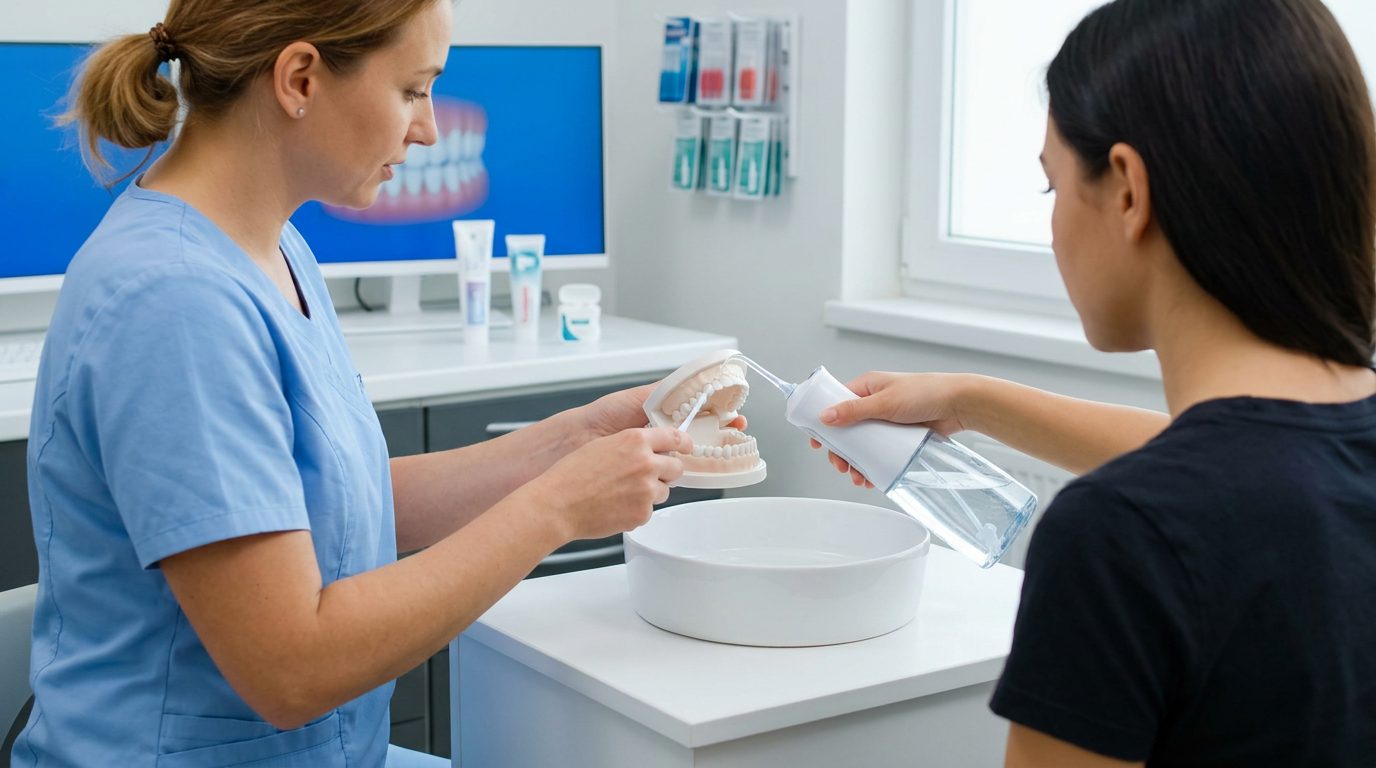
Water Flosser: Do You Need One and How to Use It Properly
If you've stood in front of the shelf with irrigators wondering whether to replace dental floss with a "water flosser", the answer is simple: don't replace it, add to it. The water jet cleans differently from floss, and the best results come from combining the two, not choosing one over the other.
What a water flosser actually does
A water flosser (irrigator) releases a thin pulsing jet of water under pressure that reaches between the teeth and below the gumline. It washes away food debris and loosens some of the soft plaque, especially in hard-to-reach spots - behind the back molars, around bridges, implants and braces. It is not meant to remove hardened tartar - that can only be done by a dentist or hygienist with professional cleaning.
The strength of the water jet is usually adjustable, which is convenient for people with sensitive or inflamed gums - you can start on low pressure and gradually increase it.
Water flosser or dental floss - which matters more
Floss works mechanically - it physically scrapes off plaque that clings tightly to the side surface of the tooth, exactly where a brush can't reach. Plaque is a sticky layer of bacteria, and if it's not removed regularly, it hardens into tartar that can no longer be cleaned at home.
A water flosser washes away and loosens particles, but it doesn't scrape off plaque with the same mechanical force as floss. That's why, for most people, floss remains the main tool for interdental cleaning, while the water flosser is a good addition - especially in the evening, after you've already brushed and flossed.
There are cases where a water flosser is a more convenient choice than floss - for example, for people with limited hand dexterity, for children under a parent's supervision, or when floss is physically hard to maneuver because of tight spaces between the teeth. In these cases, regular use of an irrigator is better than no cleaning between the teeth at all.
How to use a water flosser step by step
Fill the reservoir with lukewarm water (some models also allow a mouthwash solution, but check your device's instructions). Lean over the sink so you don't splash everywhere.
Turn the device on the lowest pressure setting if you're using it for the first time. Aim the tip at roughly a 90-degree angle toward the gumline and move slowly along each tooth - outside, inside and between the teeth. Hold for a second or two at each spot before moving on.
Spit the water into the sink as you go - you don't need to keep your mouth closed the whole time. After you've gone through all the teeth, rinse the tip and let it air dry so bacteria doesn't build up inside the device.
How to use dental floss correctly
Cut a piece of floss about the length of your forearm, wind most of it around the middle finger of one hand and a little around the other, so you have a taut section of about 3-4 cm between your thumbs and index fingers.
Slide the floss gently between two teeth with light back-and-forth movements, without pressing it sharply into the gum - a sharp motion is a common cause of injury and bleeding. When the floss reaches the gumline, curve it into a "C" shape around one tooth and move it up and down a few times, then do the same around the neighboring tooth. For each next interdental space, use a clean section of floss.
Who a water flosser is especially suitable for
With braces, the water jet reaches under the wire and around the brackets more easily than floss, which often requires a special needle or floss with a stiff tip. With implant restorations and bridges, where classic floss can't be threaded between the teeth in the usual way, the irrigator helps wash out food debris from under the prosthetic part.
People with sensitive or bleeding gums also often find the water jet more tolerable than the mechanical friction of floss, at least at the start of gingivitis treatment. Even so, in these cases interdental brushes or floss remain important for actually removing plaque - so the best approach is a combination tailored to your specific case.
When to see a dentist
If your gums bleed persistently when brushing or flossing, if you notice bad breath that doesn't go away, or if you notice exposed tooth necks and increased sensitivity, don't wait - book an appointment for a check-up. Bleeding is often a sign of gum inflammation, which with professional cleaning and proper home hygiene is usually well managed, but it's easier to stop at an early stage.
Also, if you wear braces or have an implant and aren't sure exactly how to clean around them, it's better to ask your dentist or hygienist directly - they can demonstrate the technique in person, tailored to your mouth.
If you'd like to discuss which combination of home hygiene tools is right for you - water flosser, floss or interdental brushes - you can call or message SF Dent at +359 87 666 2785, including via WhatsApp, to book a consultation appointment.
Frequently asked questions
Does a water flosser replace dental floss?
Not completely. A water flosser cleans with a water jet and removes some plaque buildup and food debris, but floss scrapes off the plaque that's stuck tightly to the tooth, and it does that better. It's best to use both together.
How many times a day should you use a water flosser?
Usually once a day is enough, most often in the evening after brushing. With braces or an implant, morning use is sometimes recommended too, but ask your dentist for a precise recommendation.
Does a water flosser hurt or irritate the gums?
At first you may feel slight irritation or even light gum bleeding, especially if there's inflammation. If you start on a low pressure setting and gradually increase it, the discomfort usually disappears within a few days.
Is a water flosser suitable for people with braces or implants?
Yes, with braces and implants the water jet helps clean areas that floss has trouble reaching. It's still good to combine it with interdental brushes or floss where possible.
Which type of dental floss is better - waxed or unwaxed?
Both do the job of removing plaque between teeth. Waxed floss slides more easily and irritates the gums less, especially if the teeth are closely spaced, which is why many people prefer it for everyday use.
